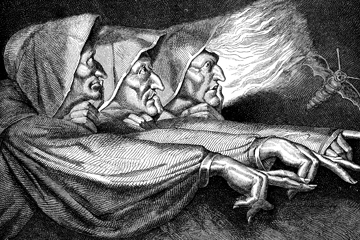
A Tale of Magic, Mystery, and Retribution: The Coven’s Curse

saintgeorgesflushing.org – In the heart of an ancient forest, shrouded in mist and whispered legends, lies the secretive enclave of the Coven. This is not a place for the faint of heart, for it is here that the most powerful witches of the land convene, their magic as potent as it is perilous. Among their many tales, one stands out with chilling clarity: the story of “The Coven’s Curse.”

Origins of the Curse

The tale begins centuries ago, when the Coven was formed to protect the balance of nature and the sanctity of magic. These witches were guardians, their spells and incantations woven to safeguard the world from dark forces. However, as with all power, there were those who sought to exploit it for their own gain.

A cunning warlock, envious of the Coven’s strength, devised a malevolent plan. He infiltrated their ranks, sowing discord and betrayal. His aim was to seize control of their combined powers. But the witches, wise and vigilant, discovered his treachery before it was too late.

In their wrath, the Coven cast a curse upon the warlock, binding his essence to the forest, forever trapped between worlds. This curse, however, was not without cost. It tied the fates of the Coven to the forest, ensuring that any who would harm the Coven or their sanctuary would face the full brunt of their collective fury.

The Curse’s Legacy

Over the years, the curse has become a legend, a warning to those who would dare to threaten the Coven or the natural order they protect. It is said that the forest itself is alive with the magic of the curse, its roots and branches acting as sentinels against intruders.

Those who have witnessed the curse speak of a terrifying beauty—a storm of magic that twists reality, ensnaring the guilty in an endless nightmare from which there is no escape. The Coven’s Curse is not merely a punishment; it is a statement of power, a testament to the witches’ unbreakable bond with their sanctuary.

The Coven Today

Today, the Coven remains a beacon of magic and mystery. They continue to protect the balance of the world, their curse a reminder of the price of betrayal. Yet, they are not without compassion. The Coven uses its magic to heal and to teach, guiding those who seek knowledge of the natural world and the ancient arts.

To those who respect the Coven and their domain, the witches offer wisdom and protection. But to those who would seek to harm them or their home, the curse stands as an ever-present threat, a reminder of the power that lies within the heart of the forest.

Conclusion

“The Coven’s Curse” is more than just a tale of retribution; it is a story of unity, strength, and the enduring power of magic. It serves as a reminder that even in a world that often forgets the old ways, there are forces at work that are beyond our understanding, forces that demand our respect and caution.

As the legend of the Coven continues to grow, so too does the mystery surrounding their curse. It is a reminder that some stories, like the magic they contain, are timeless.

Canine Suicide Mystery: The Eerie Overtoun Bridge

saintgeorgesflushing.org – Nestled in the picturesque countryside of Scotland, the Overtoun Bridge spans a deep gorge, offering a breathtaking view of the surrounding landscape. Constructed in the 19th century, this architectural marvel was intended to serve as a safe passage for pedestrians and animals alike. However, the bridge has become infamous for a much darker reason: it has been the site of numerous canine suicides, a phenomenon that has baffled animal experts, psychologists, and paranormal enthusiasts alike.

The first reported incident occurred in the 1950s, and since then, dozens of dogs, mostly of small to medium breeds, have leaped to their deaths from the bridge. The pattern is eerily similar each time: the dog approaches the bridge, becomes visibly agitated, and then, without hesitation, jumps over the edge. The drop is approximately 50 feet, and while some dogs have miraculously survived, many have not been so fortunate.

Several theories have been proposed to explain this phenomenon. One of the most popular is the “scent theory,” which suggests that the dogs are lured by the scent of animals such as rodents or foxes on the other side of the gorge. The bridge’s construction, with its tall walls and smooth surface, may amplify these scents, making them irresistible to the dogs. However, this theory fails to explain why only certain breeds of dogs are affected or why the dogs jump rather than simply run along the bridge.

Another theory involves the possibility of a “death drive” or a natural instinct in animals that compels them to seek death under certain circumstances. This theory is controversial and not widely accepted by animal behaviorists, who argue that such an instinct has not been proven to exist in dogs.

Paranormal enthusiasts have offered a more supernatural explanation, suggesting that the bridge is haunted by spirits that either lure the dogs to their deaths or possess them, causing them to jump. This theory, while intriguing, lacks scientific evidence and is often dismissed by skeptics.

In an attempt to prevent further incidents, the bridge’s owners have taken several measures, including installing a higher fence along the bridge’s edge. This has significantly reduced the number of incidents, although it has not stopped them entirely.

The Overtoun Bridge remains a subject of fascination and speculation. It stands as a testament to the mysteries that still exist in the world, reminding us of the complexity of animal behavior and the limits of human understanding. Whether the cause is natural, supernatural, or a combination of factors, the eerie Overtoun Bridge continues to captivate the imaginations of those who hear its story, leaving many to wonder if its secrets will ever be fully unraveled.

The great Journey of Monarchs: Secrets of Butterfly Migration

The migration of monarch butterflies is one of nature’s most awe-inspiring phenomena, a journey that spans thousands of miles and multiple generations. Each year, these delicate creatures embark on a perilous odyssey, driven by an innate navigational system that guides them from the United States and Canada to the oyamel fir forests of central Mexico and the coastal groves of California. This article delves into the remarkable journey of monarch butterflies, exploring the science behind their migration, the challenges they face, and the conservation efforts aimed at protecting this iconic species.

The Migratory Path:
The monarch migration is a cycle that begins in late summer and early fall, as the butterflies born in the northern regions of the United States and Canada start their southward journey. These monarchs are not the same individuals that will complete the trip; instead, they are part of a relay that spans generations. It takes up to three generations of monarchs to complete the full migration, with each generation living only a few weeks before laying eggs for the next.

The monarchs use a combination of the sun’s position, the Earth’s magnetic field, and landmarks to navigate their way south. They fly during the day and roost at night, covering distances of up to 100 miles per day. The journey is fraught with dangers, including predators, storms, and exhaustion, yet the monarchs are remarkably resilient.

The Overwintering Sites:
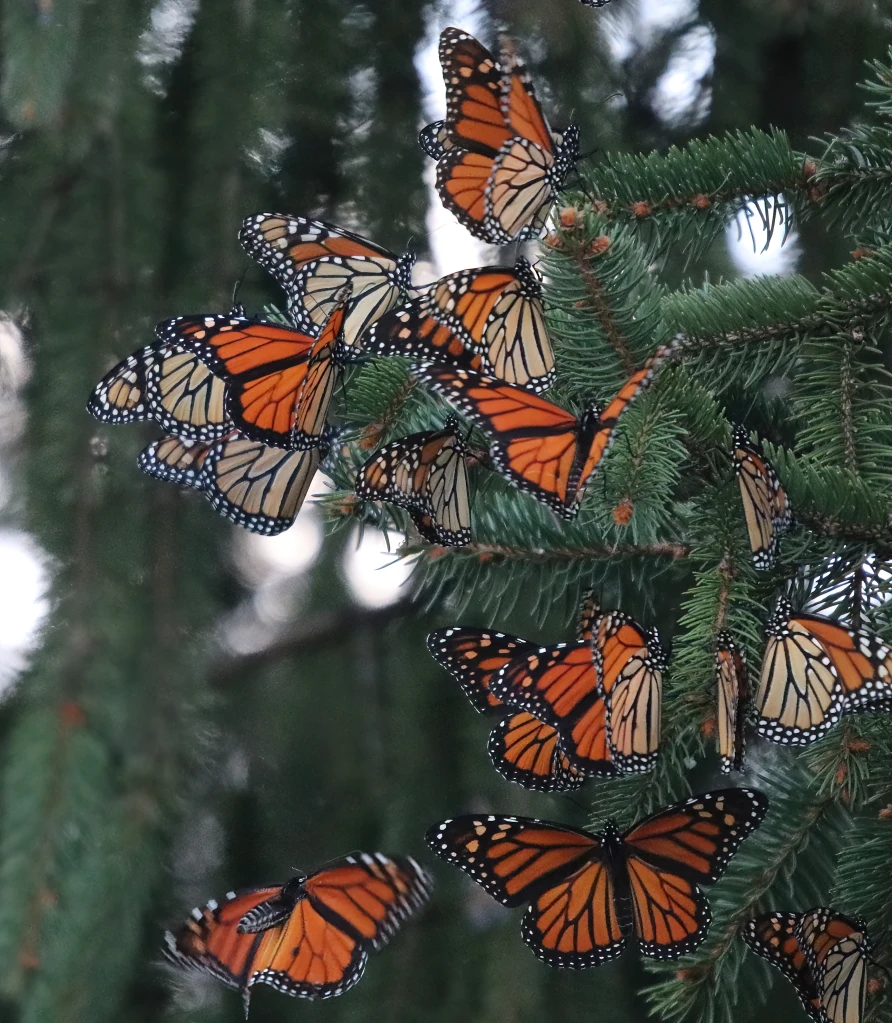
After a grueling journey, the monarchs arrive at their overwintering sites. In Mexico, they cluster in the high-altitude oyamel fir forests, where millions of butterflies can cover the trees, creating a breathtaking spectacle. In California, they gather in groves along the coast, where they form dense clusters on tree branches. These sites are critical for the monarchs’ survival, offering protection from the elements and predators.

The Return Migration:
In the spring, the monarchs begin their northward journey. The butterflies that leave the overwintering sites are not the same ones that arrived the previous fall; they are the offspring of those original migrants. These new generations will lay eggs along the way, with the final generation reaching the northern breeding grounds. The cycle then repeats, with the next generation beginning the southward migration in the fall.

Conservation Challenges:
The monarch butterfly’s migration is under threat from habitat loss, climate change, and the use of pesticides. The destruction of milkweed, the plant on which monarchs lay their eggs and on which their larvae feed, is a significant concern. Additionally, the oyamel fir forests in Mexico are under pressure from logging and development. Conservation efforts are underway to protect the monarch’s habitat, including the establishment of protected areas and the promotion of milkweed planting.

Conclusion:
The migration of monarch butterflies is a testament to the wonders of nature and the resilience of life. It is a journey that has captivated scientists and nature enthusiasts alike, inspiring awe and a sense of stewardship for the natural world. As we continue to learn from and protect the monarchs, we are reminded of the interconnectedness of all life on Earth and the importance of preserving the habitats that support such remarkable phenomena. The monarch’s migration is not just a journey across continents; it is a journey through time, a living legacy that connects generations of butterflies and people alike.