The Love Island Love Stories: Hearts on Fire

saintgeorgesflushing.org – Love Island, the reality TV show that has taken the world by storm, is not just about the sun, sea, and scandal. At its heart, it’s a show that explores the complexities of love, relationships, and human connection. Since its inception, the show has been a breeding ground for some of the most talked-about love stories in recent times. From whirlwind romances to long-lasting relationships, Love Island has been a platform for contestants to find love in the most unconventional of settings.

The Whirlwind Romances

One of the most captivating aspects of Love Island is the speed at which relationships develop. The intense environment of the villa, coupled with the 24/7 cameras, creates a pressure cooker scenario where emotions run high, and connections are formed at an accelerated pace. These whirlwind romances are often the most entertaining to watch, with couples declaring their love for each other within weeks of meeting. While many of these relationships fizzle out once the real world intrudes, some have managed to stand the test of time, proving that love at first sight can indeed last.

The Long-Lasting Relationships

Among the many couples that have graced the Love Island villa, a select few have managed to turn their reality TV romance into a lasting relationship. These couples have shown that it’s possible to find true love in the most unlikely of places. They’ve navigated the challenges of fame, public scrutiny, and the transition from the villa to the real world, emerging stronger on the other side. Their stories are a testament to the power of love and the belief that sometimes, you just know when you’ve found “the one.”

The Challenges of Love Island Love

Finding love on a reality TV show is not without its challenges. The couples that emerge from Love Island face a unique set of obstacles, including media attention, public opinion, and the pressure to maintain a perfect image. These external factors can put a strain on even the strongest of relationships. However, for those who are able to weather the storm, the bond formed in the villa can be unbreakable.

Conclusion

Love Island may be a show about love, but it’s also a show about resilience, growth, and the human experience. The love stories that have unfolded within its walls are as varied as they are captivating, each one teaching us something new about the complexities of love. Whether they last a season or a lifetime, the relationships formed on Love Island remind us that love is a journey, and sometimes, the most unexpected journeys lead to the most beautiful destinations.
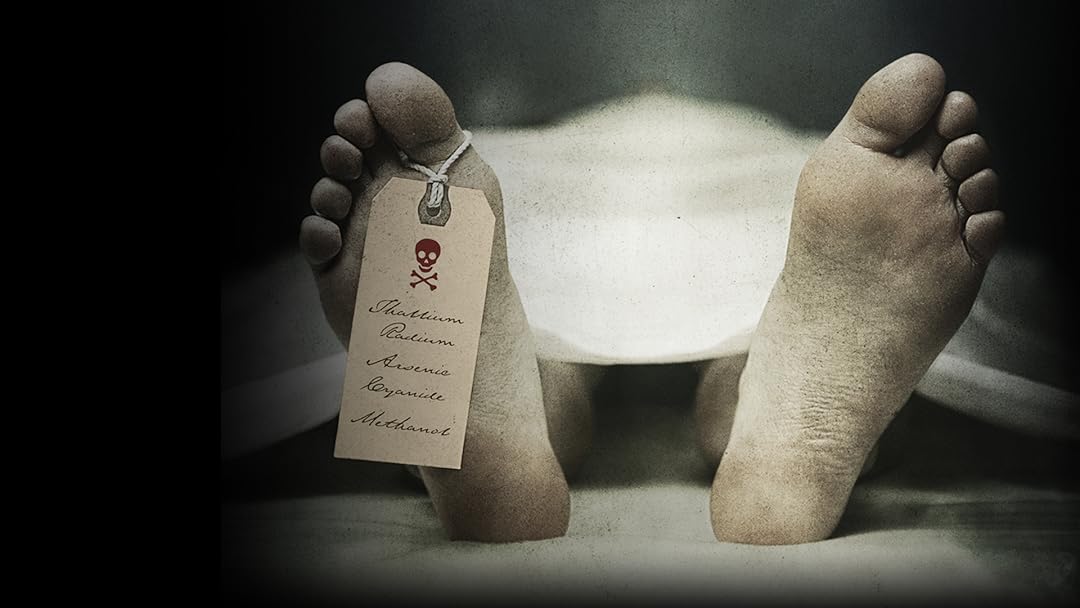
The Poisoner’s Handbook & the Victorian Era’s Toxic Love Stories

saintgeorgesflushing.org – In the shadowy corners of Victorian society, where the gas lamps flickered and the cobblestone streets whispered secrets, there existed a world where love and death intertwined in the most sinister of dances. This was the era of the “Poisoner’s Handbook,” a chilling account of a time when passion and poison went hand in hand, and the science of murder was as intricate as the lace on a lady’s glove.

The Victorian age, with its strict moral codes and rigid social structures, was a period of stark contrasts. On one hand, it was an era of unprecedented scientific advancement and industrial growth. On the other, it was a time when the darker aspects of human nature played out in the most macabre of ways. Nowhere was this more evident than in the crimes of passion that shook the very foundations of Victorian society.

“The Poisoner’s Handbook” delves into the stories of those who turned to toxicology not for healing, but for harm. It was an age when arsenic could be found in the flypapers hanging on the walls, strychnine was used to kill rodents, and digitalis, a heart stimulant, was just as likely to stop a heart as to start it. These poisons were the weapons of choice for those who sought to rid themselves of unwanted spouses, to inherit fortunes, or to escape the drudgery of their lives.

One of the most infamous cases of the time was that of Mary Ann Cotton, known as the “Black Widow.” She was a serial killer who used arsenic to dispose of her family members and collect insurance money. Her story is a grim reminder of the ease with which poison could be obtained and the devastating effects it could have on unsuspecting victims.

But the rise of these crimes also sparked a revolution in forensic science. The Victorian era saw the birth of toxicology as a discipline, with pioneers like Dr. Robert Christison and Dr. Alfred Swaine Taylor leading the charge. These men developed methods for detecting poisons in the body, laying the groundwork for modern forensic toxicology.

The science of murder became as much a part of the Victorian landscape as the steam engines that powered the Industrial Revolution. Autopsies became more sophisticated, and the microscope became a detective’s best friend. The battle between poisoner and scientist was a deadly game of cat and mouse, with the fate of the accused hanging in the balance.

“The Poisoner’s Handbook” is not just a chronicle of crime and punishment; it is a testament to the human spirit’s capacity for both evil and ingenuity. It reveals a society where the veneer of respectability could not conceal the rot within, and where the quest for knowledge was as relentless as the pursuit of justice.

As we look back on the Victorian era, we are reminded that the line between love and hate, life and death, can be as thin as the edge of a razor. “The Poisoner’s Handbook” invites us to peer into the abyss and confront the darkness that lies within us all. It is a cautionary tale for the ages, a reminder that the heart can be as poisonous as any vial of arsenic, and that the only antidote may be the light of reason and the pursuit of truth.